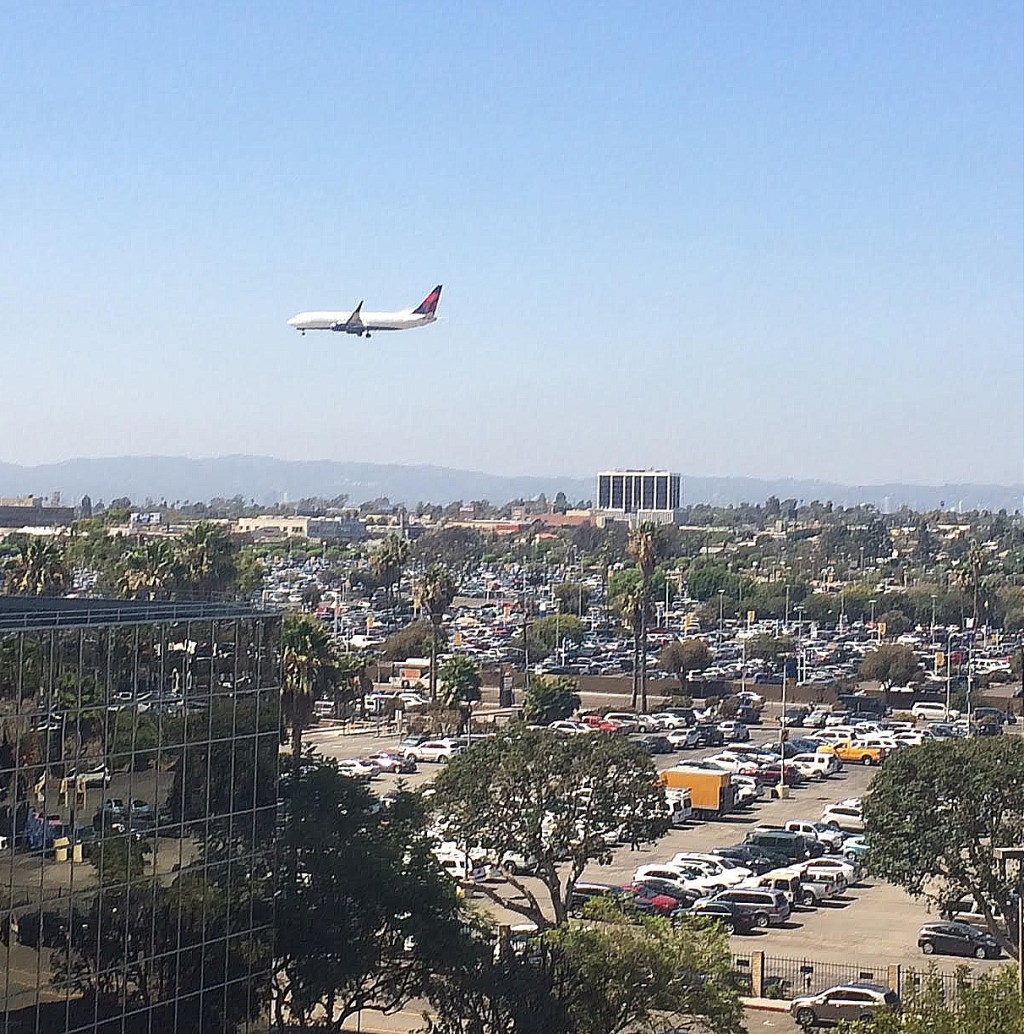
“Thank you for flying, United,” I said to every one of the passengers as they deplaned onto the jet bridge leading into LAX, Los Angeles’s bustling airport. Before deplaning the Airbus 320, an elderly couple stopped in front of me, and the wife said,
“It’s disgraceful that you have taken us out of our way. I will never fly this airline again!”
“Gasp,” I feigned shock as the wife marched away with her husband hurrying behind her. I said, mustering up all the graciousness I could,
“I apologize for the inconvenience.”
At this late hour, what I wanted to tell the couple before they disembarked from Flight 665 was this.
“What would’ve been disgraceful is you two having your asses on fire as the plane went down in a ball of flames!”
But I didn’t.
I remained composed and continued saying my goodbyes to the deplaning passengers. I understood, however, why the couple was angry. We had taken away an hour or more from what they probably thought was their short time left here on earth.
Diversion Airport: LAX
About 3/4 of the way into the four-hour flight, the captain informed me he no longer had control of the flight instruments. The Airbus, a fly-by-wire aircraft, computer malfunctioned, and he couldn’t tell if the plane had brakes or landing gear. He said we would need to land on a long runway to survive an emergency landing. Orange County, CA, our original destination, couldn’t accommodate us. We would, instead, divert to LAX, which was an hour or more away.
I secured the first cabin. I shared the information with my crew and said to await further instructions from the captain or me. The captain announced the flight’s diversion to LAX and advised the passengers of a possible mechanical problem. We didn’t alarm the passengers unnecessarily, and the flight continued as if it were routine.
LOSE THE ACT
As I mentioned in the post “eHarmony | The 20 Percent,” I learned that my personality traits were, in fact, a traitor to me when I didn’t have control of my emotions. All it took was a perfect specimen of a man entering my life who knocked me off my feet, and I lost it.
I didn’t know how to act. You know that saying “get your act together”? Well, your act is just that – a show. And it only works when you are in control of your environment. When you have no control, such as in an emergency, then what? Most of us will have a “breakdown,” and the real you will appear.
Eight years had passed since my meltdown with “Mr. Golden Aura.” I worked as a flight attendant for four years and was trained to respond to an emergency when my “act” failed me. I learned how to move through emotional outbursts without trying to control them.
CONTROLLED CHAOS
Think of the word Chaos. Merriam-Webster defines Chaos as a state of utter confusion.
Think of “Chaos” as an acronym – CHAOS. It’s what helped when my act exited.
- Clear
- Head
- Assess
- Observe
- Situation
In Initial Flight Attendant training, there was one phrase our supervisors and trainers emphasized in every lesson.
“Control what is within your control”
Once I cleared my mind and assessed and observed the situation, I determined that the one thing I had control over was my thinking—which helped me find a solution.
In this situation, I put away everything that could become a projectile. I checked my emergency equipment, did a silent review of my evacuation procedures, and ensured all the carts were secured because those could become weapons in a crash or block an exit. You see where I’m going here.
Of course, I was afraid, but experiencing emotions doesn’t cause disaster; it’s trying to control yourself from displaying emotions.
EMERGENCY AVERTED
Once we began our initial descent into LAX, the captain informed me the computer had rebooted. The plane’s activity was visible, and we landed without incident. Customer service representatives chartered a bus for the passengers. They took them to their original destination, John Wayne Airport (SNA) in Orange County, California.
As the Lead Flight Attendant, I never had to prepare the cabin for a land emergency (a gentle term for a crash). In fact, when I spoke with the captain once we were on the ground, he thought I didn’t understand the severity of the situation. I assured him I understood perfectly – but my goal was to evacuate the passengers if need be. I couldn’t do that if they were visibly shaken due to a crash that “might” happen. You see, in an impending plane emergency, the flight attendants become the “entertainment” because all eyes are on them. If the flight attendants are crying, the passengers will be terrified. Frightened passengers lessen the chance of cooperating when it’s time to evacuate.
Since we aren’t all afforded emergency first response training, remember to try CHAOS (Clear Head; Assess Observe Situation) and control your thinking in an emergency or when experiencing a personal breakdown.
Thank you for reading!
If you find any typos, grammatical errors, or editorial corrections, please indicate them in the comment box below. Of course, we welcome comments, too!






 Art ∩ Mel
Leave a reply to whitec1971 Cancel reply